Most successful companies have at least one defining asset that drives revenue and shapes its identity.
Take Hershey (HSY), which I mentioned yesterday. You might assume the defining asset is Hershey’s Kisses. But the true sales powerhouse is Reese’s. In 2024, the brand brought in $3.17 billion in revenue. That made it the No. 1 selling candy brand in the U.S. that year.
Or consider Apple’s iconic iPhone. The company and the product are practically synonymous. To this day, the iPhone generates about half of Apple’s revenue.
It’s a similar story with Nike and Air Jordan shoes. That brand practically made Nike into the company it is today, and it’s still a major driver of sales.
The same idea holds for real estate investment trusts (“REITs”). Some of these corporate landlords hold a large, diversified real estate portfolio. Others are more concentrated around a single, iconic property.
An Empire State of Mind
The Empire State Building is one of the most famous skyscrapers in the world. It’s aninstantly recognizable symbol of New York City, American ambition, and Depression-era engineering.
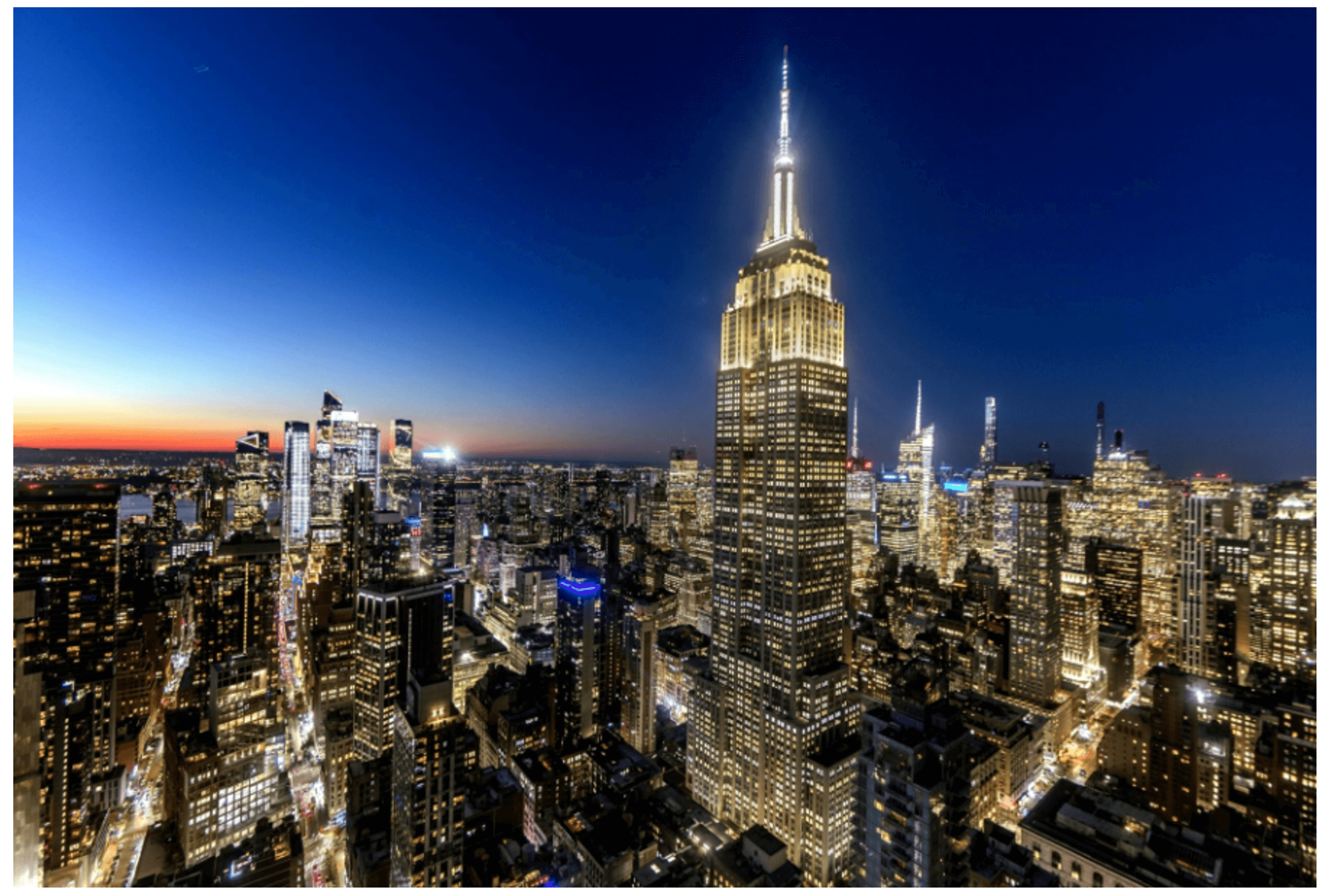
Source: wall.alphacoders.com
I’m sure you know the building. It is, after all, iconic. But here’s something not many people know – who owns it?
In 2011, a private REIT known as Empire State Realty Trust (ESRT) was formed to consolidate it and other Manhattan properties. The company then made its market debut on October 7, 2013. The REIT allowed the average Joe to become a fractional owner in this enormous piece of history.
But that piece of history is also an enormous part of ESRT’s business. More than 50% of net operating income (“NOI”) is derived from New York office buildings, with the Empire State Building making up a large chunk.
As you might imagine, the stock hasn’t performed well in recent years…
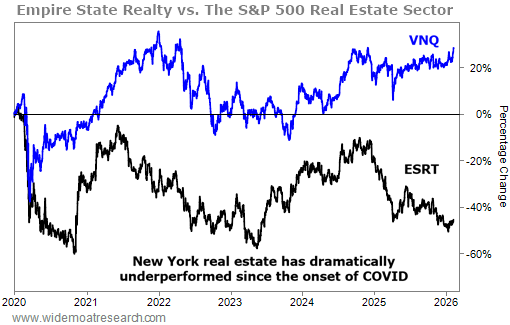
Since the onset of COVID-19 in March 2020, shares of ESRT are down about 47%. That compares with a positive 25% return from the Vanguard Real Estate Fund (VNQ), a fair proxy for REITs.
Now, the Empire State Building itself is holding up. As of year’s end 2025, it was 95.5% leased through 150 rental contracts at an annual rate of $67.66 per square foot.
And in the third quarter of 2025, the property’s Observatory business alone generated approximately $26.5 million in NOI, reflecting a resilient asset that generates strong bottom-line cash flow. This level of growth shows the durability of demand for what remains one of NYC’s most iconic experiences.
But ESRT also owns other properties, including nine other office assets, 743 units worth of multifamily buildings, and a range of retail locations. Altogether, they generated core funds from operations (“FFO”) of $0.23 per diluted share in the third quarter of 2025, while same-store property cash NOI increased 1.1% year over year.
In further good news, its Manhattan office occupancy increased 80 basis points sequentially to 90.3%. That means ESRT’s portfolio is now over 93% leased, marking the 11th consecutive quarter above 90%.
So even outside of its trophy asset, the REIT is looking pretty good.
Shares are now trading at 25.2 times. Based on normal multiples, that’s not a bargain.
However…
Four analysts forecast 49% growth this year, suggesting there could be significant upside to buying shares in this NY-centric REIT. There’s a lot of political, social, and economic drama going on in the city that could have lasting effects on its businesses, so weigh that carefully.
But if you believe in the future of New York City, it may be time to snatch up a few shares.
Veni, Vidi, VICI
Caesars Palace is one of the most iconic hotels and casinos in Las Vegas. This trophy property was founded by local entrepreneur Jay Sarno and opened on August 5, 1966 – back when Vegas was still dominated by smaller casino properties.
The concept was revolutionary. Instead of just gambling, Caesars focused on high-end entertainment, celebrity appeal, and luxury experiences.
Its famous entertainment venue, the Colosseum, opened in 2003, originally built for Céline Dion’s residency and later hosting many of the biggest names in music.
Caesars Palace changed ownership multiple times as the Las Vegas Strip consolidated. It became part of the Caesars Entertainment (CZR) empire in 1996, but on January 15, 2015, Caesars Entertainment Operating Company – the corporation’s largest operating subsidiary – filed for Chapter 11 bankruptcy.
That’s how, in February 2018, VICI Properties was formed. Its intent was to own and lease back many of Caesars’ assets, including the iconic Caesars Palace in Las Vegas.
The $1.4 billion IPO was one of the largest that year and the largest REIT IPO ever at the time.
Since then, VICI has grown rapidly, now with a portfolio that includes 54 gaming properties and 39 other experiential properties. In 2022, it achieved investment-grade ratings and S&P 500 inclusion.
Caesars Entertainment remains its largest tenant with 18 properties, generating over $1.2 million in revenue and accounting for 39% of VICI’s annualized cash rent. In second is MGM Resorts with 13 properties that account for around 35% of revenue.
VICI has pulled back recently due to a softening in the Las Vegas market. Specifically, its Caesars Regional Lease saw a 28% decline in earnings before interest, taxes, depreciation, amortization, and rent/restructuring (“EBITDAR”) since 2021 – with a 13% increase in rent.
Given that Caesars is VICI’s largest customer, the market is understandably concerned about the low rent coverage (roughly 1 times), which could result in a lease reset.
That’s one of the reasons why I met with VICI’s management just a few weeks ago. They emphasized how they hope to see improvements in Las Vegas operations before considering a lease modification.
VICI now trades at 12.2 times price to adjusted FFO (“AFFO”)… below its normal multiple of 15.7 times. That makes its dividend yield a juicy 6,2%.
Analysts forecast growth of 3% in both 2026 and 2027. Given the “sum of the parts,” we believe VICI could return over 20% during the next 12 months.
Regards,
Brad Thomas
Editor, Wide Moat Daily
|